Predicting Diamond Cut Quality
We built a smart computer program that can tell how well a diamond is cut just by looking at its features. It helps diamond companies make sure they're selling the best quality diamonds.
MLAutomata
Contents
  • Introduction
  • Objective
  • Solution
  • Data Analysis
  • Model
  • Explainability
  • Conclusion
For Predicting Diamond Cut Quality

Introduction

A prominent diamond manufacturer seeks to optimize its production process by predicting the cut quality of diamonds. By accurately classifying diamonds into different cut categories based on their characteristics, the manufacturer aims to enhance quality control measures and ensure customer satisfaction.

Objective

The Objective of the study is to find a predictive model to find and classify the quality of the diamond based on the features like caret, dimensions, clarity, depth etc. By leveraging machine learning techniques, the study aims to achieve Optimize Production Process, Enhance Quality Control Measures, Improve Customer Satisfaction and Reduce Operational Costs. All these can be done by Automating the process using high performing machine learning algorithm.

Solution

The ability to accurately classify diamond cut quality sets the manufacturer apart from competitors. By leveraging advanced data science techniques, the manufacturer demonstrates innovation and leadership in the industry, attracting customers who value quality and precision. Delivering diamonds with precise cut quality enhances customer satisfaction. Customers receive products that meet or exceed industry standards, leading to positive experiences and repeat business. This contributes to long-term customer loyalty and positive brand perception.
Technologies Used :
MLAutomata

Data Analysis

image
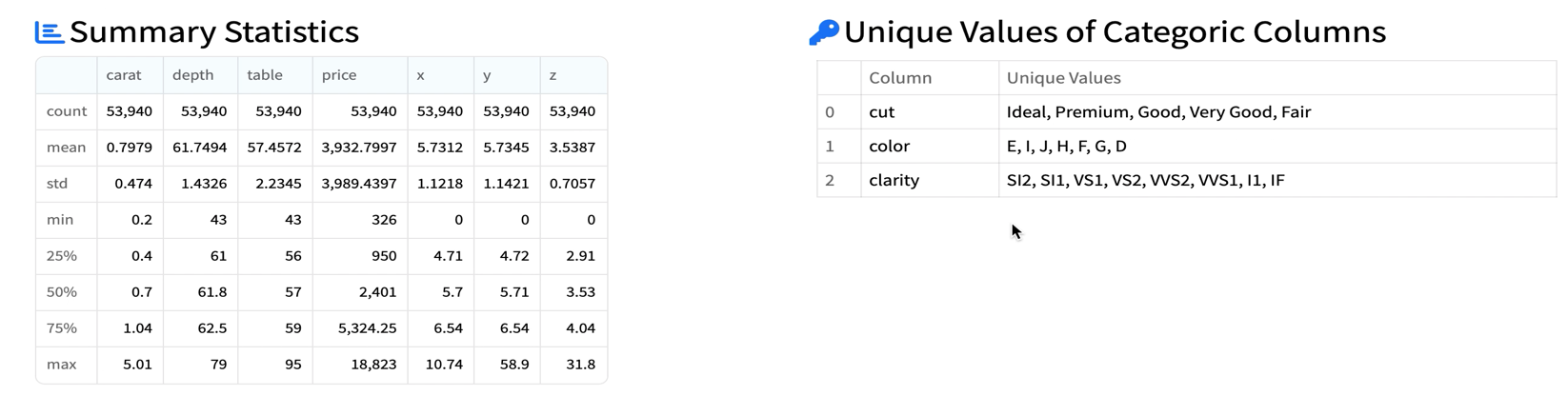
The Diamonds dataset, sourced from Kaggle, comprises 53,940 observations and 10 features. These features include the carat weight of the diamond, its cut quality categorized into Fair, Good, Very Good, Premium, or Ideal, as well as colour and clarity ratings. Additional attributes encompass the diamonds dimensions, such as length, width, and depth. The target variable for analysis is the diamond cut quality, representing the craftsmanship and precision of the diamonds cut. During exploratory data analysis, the distribution of features and their relationships with cut quality were thoroughly investigated. Furthermore, the dataset underwent feature engineering and encoding categorical variables to facilitate model compatibility. Some of the features are very highly correlated such as price, caret, x, y, z.
image
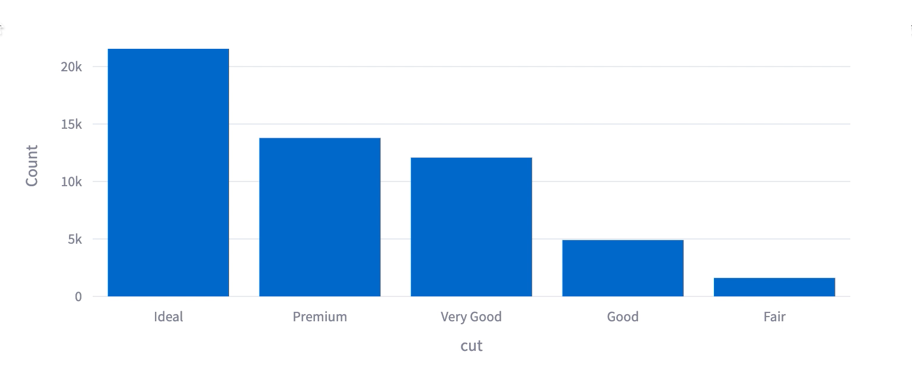
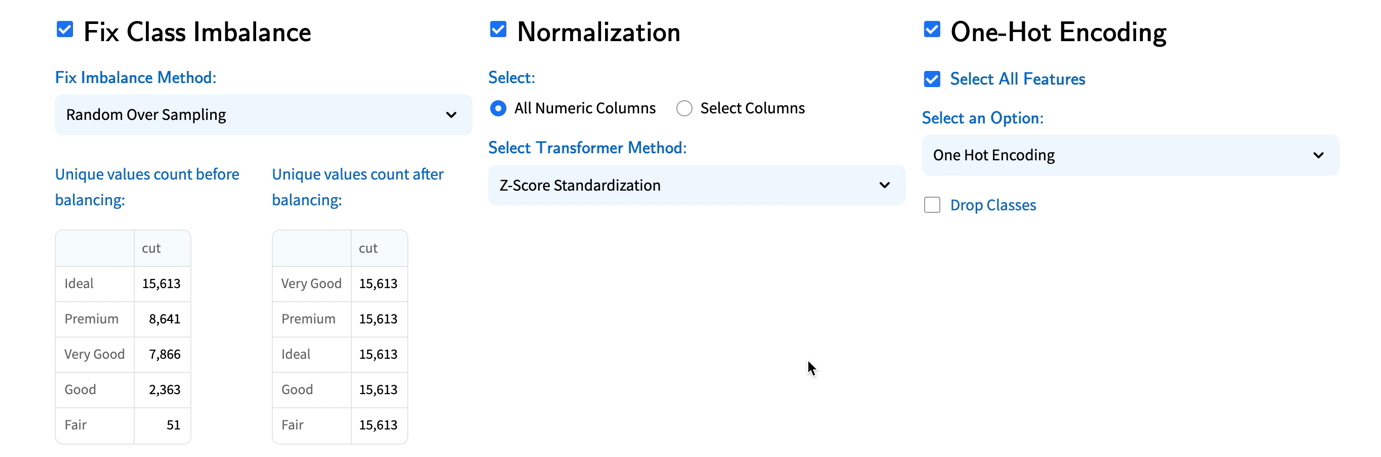
The distribution of the target column shows us that the diamond cut like good and fair are very low when compared to other cuts, so we have done SMOTE to handle this imbalance Ness.
image

Model

After thorough data preprocessing and feature engineering, including handling missing values, encoding categorical variables, and scaling numerical features, we proceeded to train two machine learning models, namely Decision Tree and Random Forest, on the Diamonds dataset.
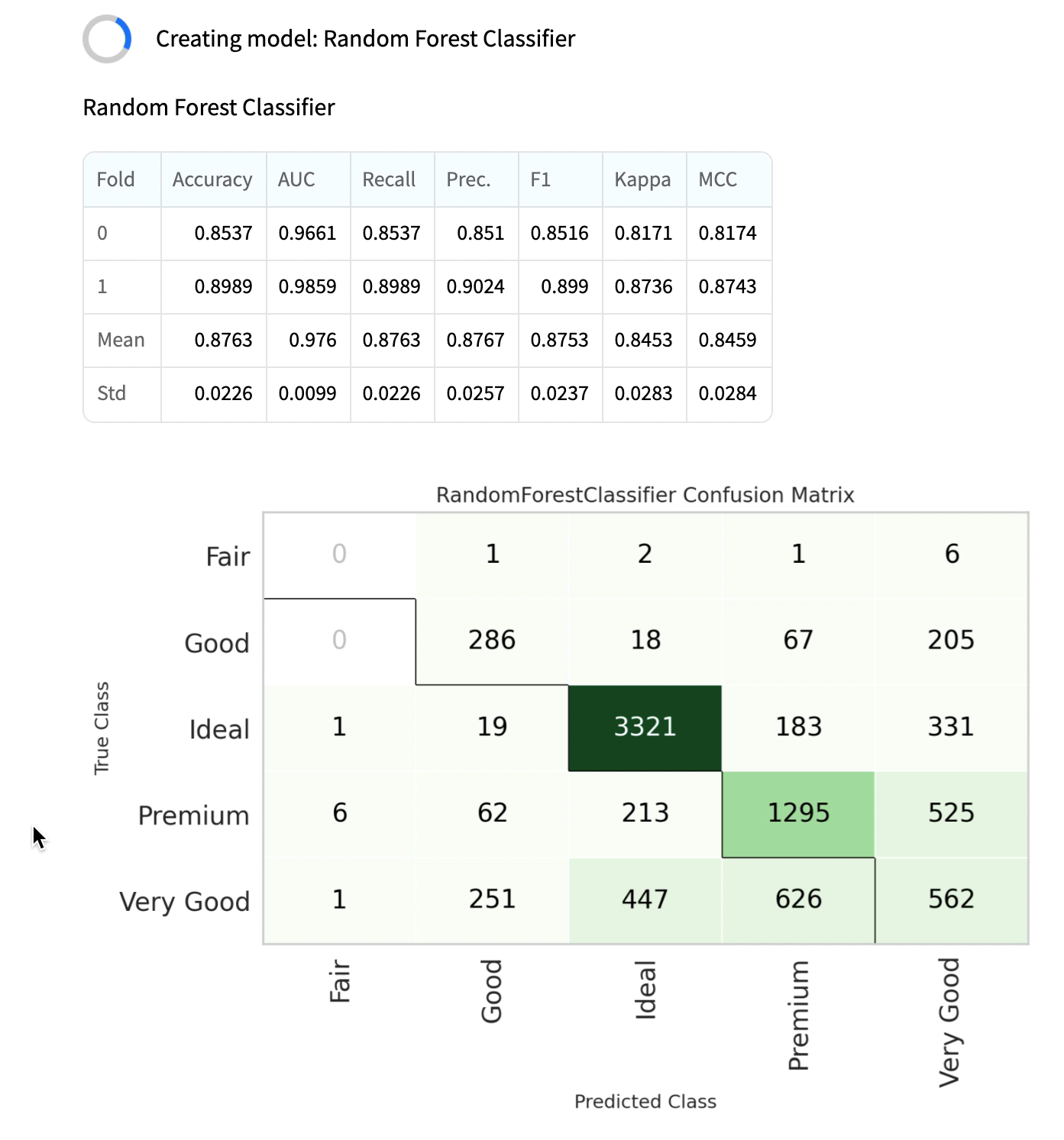
we then trained the model on the preprocessed dataset, using the 'cut' column as the target variable. The Decision Tree algorithm recursively partitions the feature space based on the values of different features, aiming to maximize the purity of the resulting leaf nodes in terms of the target variable. Similarly, Random Forest is an ensemble learning technique that trains multiple decision trees on random subsets of the data and aggregates their predictions to make more accurate and robust predictions.
After training both models, I evaluated their performance using appropriate metrics such as accuracy, precision, recall, and F1-score on a separate test dataset. Additionally, I visualized the decision boundaries of the Decision Tree model and analyzed feature importance scores provided by the Random Forest model to gain insights into the factors influencing diamond cut quality.
Overall, by training Decision Tree and Random Forest models on the Diamonds dataset, I aimed to develop accurate and interpretable models for predicting diamond cut quality, thereby facilitating quality control processes within the diamond manufacturing industry.
image

Explainability

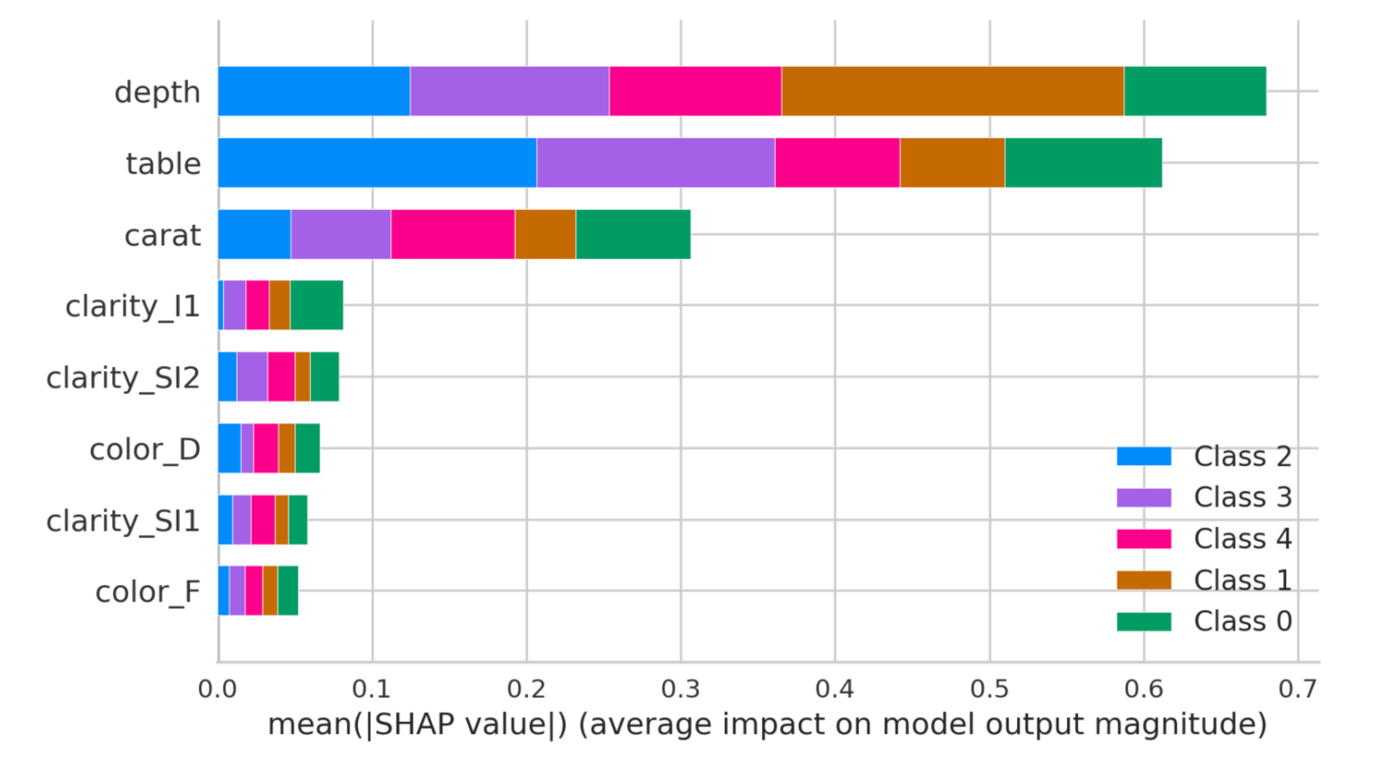
After building and fine-tuning our machine learning model, we proceeded to interpret its predictions using SHAP (SHapley Additive exPlanations) values, which provide insights into feature importance and the impact of individual features on model predictions. To visualize the global importance of features in our model.
image

Conclusion

In conclusion, our project aimed to develop a predictive model for diamond cut quality classification using machine learning techniques applied to the Diamonds dataset. Through rigorous data preprocessing, feature engineering, and model training, we successfully built accurate and interpretable models, including Decision Tree and Random Forest classifiers, to predict diamond cut quality based on various characteristics.
Our model evaluation demonstrated strong performance, with high accuracy and precision scores on the test dataset, indicating robust predictive capabilities. Visualizations such as global SHAP plots provided valuable insights into feature importance and the factors influencing diamond cut quality.
Overall, our project contributes to streamlining quality control processes in the diamond manufacturing industry, enhancing product quality, and improving operational efficiency. By deploying our model into production environments., diamond manufacturers can automate cut quality assessment, reduce costs, and ensure consistent product quality across production batches.
Explore More
Credit Card fraud Detection algorithms at a bank based in Nigeria

Automation for Fraud Detection for a Bank.

Vehicle Insurance Fraud Detection

Our Vehicle Insurance Fraud Analytics solution uses advanced machine learning algorithms to help you identify fraudulent claims and improve the overall risk management of your organization. Analyse historical insurance claims data, identify patterns and anomalies, and detect potential fraudulent claims with the help of our solution.

Customer Propensity Model for Retail Bank

Unlock customer insights and boost profits with our Customer Prosperity Model. Our data-driven solution empowers retail banks to enhance customer experience, optimize engagement strategies and grow revenue streams. Experience the power of predictive analytics and take your retail banking to new heights with krtrimaIQ.

Medical Insurance Fraud Analytics

Leverage machine learning algorithms to identify fraudulent behaviour patterns and improve the accuracy of fraud detection. Save time and resources by automating the fraud investigation process and increase the overall security of your medical insurance business. Contact us to learn more about our advanced fraud detection solutions.


Contact Us