Future-Proof Your Enterprise With AI
Srinivasa Rao Poladi
- Introduction
- Three Critical Dimensions For AI Strategies
- Growth - Expanding Customers, Products, and Services
- Customer Segmentation via Clustering: Advanced clustering techniques (K-Means, DBSCAN, hierarchical) uncover niche segments for targeted marketing and tailored product bundles.
- Dynamic Personalization: Recommendation engines powered by machine learning adjust in real time to changing user behavior, increasing engagement and lifetime value.
- Predictive Propensity Modeling: Forecasts which customers are most likely to buy, upgrade, or churn — enabling proactive retention strategies.
- NLP-Driven Market Insights: Analyzes customer feedback, social media chatter, and competitor data to detect unmet needs and guide new product development.
- Profitability - Driving Operational Efficiency
- Intelligent Process Automation: Combines Robotic Process Automation (RPA) with machine learning to adapt workflows on the fly, improving speed and accuracy.
- Frontier AutoML Platforms: Reduce the time and engineering effort required to build and deploy models, accelerating time-to-value.
- Computer Vision for Quality Control: Detects defects at scale with near-perfect accuracy, reducing waste and rework costs.
- AI-Driven Supply Chain Optimization: Predictive models adjust inventory levels and logistics to minimize holding costs and avoid stockouts.
- Risk Management - Anticipating And Mitigating Threats
- Anomaly Detection in Finance & Operations: Identifies irregular transactions, fraud attempts, or unusual operational patterns in real time.
- Scenario Simulation and Stress Testing: Reinforcement learning models simulate market shifts, new regulations, or competitor moves to prepare strategic responses.
- Cybersecurity Threat Detection: AI-powered intrusion detection systems analyze network traffic patterns to spot emerging threats.
- Market Intelligence Monitoring: NLP models track global news and industry reports to flag potential disruptors and alternative business models.
- How To Build And Execute An AI Strategy That Lasts
- Strategic vision and leadership commitment.
- Robust data management practices
- Talent development strategies
- Cross-functional integration
- Ethical AI implementation
- Real-world success stories
- Strategic Vision And Leadership
- Setting clear technological objectives that align with business goals
- Creating specific plans for investing in AI
- Building partnerships with technology companies
- Developing detailed plans for implementing AI
- Infrastructure and hardware
- Software licenses and subscriptions
- Staff training and development
- External expertise and consultancy
- Data Strategy And Management
- Implement automated data gathering systems
- Create standardized data collection protocols
- Establish real-time data streaming capabilities
- Design efficient data storage solutions
- Regularly clean and validate data
- Standardize data formatting
- Automate error detection
- Implement version control systems
- Use predictive modeling tools
- Apply machine learning algorithms
- Create real-time analytics dashboards
- Develop custom reporting solutions
- Complement your existing technology stack
- Creating specific plans for investing in AI
- Offer robust support systems
- Demonstrate proven expertise in your industry
- Talent Development and Integration Across Business Functions
- Creating a Skilled AI Workforce
- Recruit professionals with expertise in AI algorithms and data architecture: Look for candidates who have a deep understanding of AI techniques and can design efficient data systems.
- Develop internal talent through AI certification programs: Offer training opportunities for your current employees to gain recognized certifications in AI technologies.
- Partner with universities for internship programs and research collaborations: Establish relationships with academic institutions to bring in fresh talent through internships and work together on cutting-edge research projects.
- The Importance of Upskilling Existing Employees
- Build basic AI literacy across departments: Ensure that all employees have a fundamental understanding of AI concepts and their potential applications.
- Develop practical data analysis skills: Provide training on tools and techniques used for analyzing large datasets, enabling employees to derive insights from data.
- Create understanding of AI applications in specific roles: Tailor training sessions to showcase how AI can be leveraged in different job functions within your organization.
- Cross-Functional Integration of AI
- Ethical Considerations and Continuous Improvement in AI Adoption
- Data Privacy Protection
- Algorithmic Fairness
- Transparency in Decision-Making
- User Consent Management
- Diverse dataset collection from multiple demographics
- Regular testing of AI models for potential biases
- Implementation of bias detection tools
- Cross-functional review teams for AI decisions
- Technical teams
- Legal departments
- Human resources
- External ethics experts
- Challenges, Benefits, and Examples of Successful AI Integration in Businesses
- Inconsistent data formats
- Missing or incomplete information
- Duplicate records
- Outdated datasets
- Poor data governance
- Limited AI expertise in the workforce
- High competition for qualified professionals
- Steep learning curves for existing staff
- Gap between technical and business understanding
- Some Examples of Successful AI Integrations
- Conclusion :
- Drive data-informed decision making
- Enhance operational efficiency
- Create personalized customer experiences
- Develop innovative solutions
- Build resilient business models
- Bibliography
- Building an AI Business Strategy: A Beginner's Guide (Harvard Business School)
- Enterprise AI Strategy: How Companies Are Planning and Building for Success
- Mastercard Enhances AI Tool to Combat Payment Fraud (FinTech Magazine)
- Enhancing Fraud Detection through AI: Danske Bank's Case Study (AI.Business)
- AI-Based Solutions to Identify Fraudulent Money Transfers (AI.Business)
- Enterprise AI Solutions and Services (krtrimaIQ.ai)
In today's economy, enterprise sustainability is no longer just about surviving disruption — it's about building the capacity to grow, adapt, and thrive in an environment defined by constant change.
Artificial Intelligence has emerged as a cornerstone of this transformation, enabling organizations to rethink how they operate, compete, and deliver value.
Across industries, the most forward-looking enterprises are aligning AI strategies with three critical dimensions: Growth, Profitability, and Risk Management.
AI enables enterprises to identify new opportunities, create better offerings, and deliver personalized experiences that drive top-line growth.
AI not only automates repetitive tasks but also optimizes complex processes, improving cost structures and delivering more value per resource.
From competitive disruption to operational vulnerabilities, AI helps enterprises detect and respond to risks before they impact the bottom line.
By embedding AI across these three pillars, enterprises create a resilient growth loop — where customer insight drives innovation, operational efficiency fuels profitability, and proactive risk management safeguards long-term success.
In the next part of this series, we'll explore how to build and implement an AI strategy that is future-ready, ethical, and scalable.
In today's digital age, future-proofing your business means embracing AI and data science to stay competitive. This strategic approach combines advanced technologies with data-driven insights to create a resilient, adaptable business model ready for tomorrow's challenges.
Companies that integrate AI and data science into their operations see an average 25% increase in efficiency and a 20% reduction in operational costs.

This guide explores the essential components of future-proofing your business through AI and data science:
Let's dive into how you can transform your business into a future-ready powerhouse using AI and data science.
A successful AI implementation starts with strong leadership. Business leaders must support AI initiatives by:
Your leadership team needs to allocate budgets strategically across different AI initiatives. A balanced approach includes investments in:
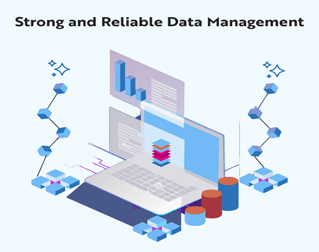
Data is the backbone of successful AI implementation. Your organization needs structured approaches to:
| Data Collection | Advanced Analytics Implementation |
|---|---|
Your data strategy should prioritize security and compliance while maintaining accessibility for authorized users. This balance ensures your AI systems have access to high-quality, reliable data while protecting sensitive information.
Technology Partnerships
Technology partnerships are important for filling capability gaps. Choose partners who:
Additionally, exploring opportunities for research collaboration can further enhance your technological capabilities and drive innovation within your organization.
Building a workforce that is ready for the future requires a strategic combination of hiring new talent and developing existing employees. Your business needs experts in artificial intelligence (AI) and data science who can lead the way in technological innovation and implementation. These professionals possess specialized knowledge in areas such as machine learning, neural networks, and advanced analytics - all of which are crucial skills for transforming businesses in today's world.
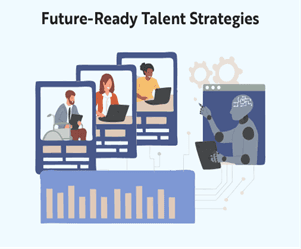
To build a skilled workforce in AI, consider the following strategies:
In addition to hiring new talent, it is equally important to upskill your existing employees. Your current workforce possesses valuable industry knowledge that, when combined with AI skills, can lead to powerful business outcomes. Implement targeted training programs to:
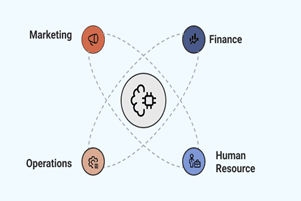
AI has the potential to transform various business functions. Here are some examples:
Marketing → Finance → Operations → Human Resources
The Role of Collaboration in Successful AI Implementation
The key to success lies in fostering collaboration between AI specialists and domain experts. Create cross-functional teams where technical experts work alongside department specialists to develop targeted AI solutions. This collaborative approach ensures that AI implementations not only meet technical requirements but also address real business needs.
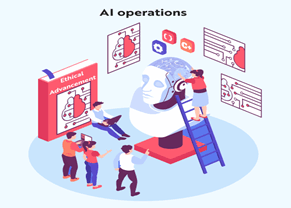
Responsible AI implementation requires strong ethical guidelines to protect stakeholders and maintain transparency. Your business needs a clear framework addressing:
Bias mitigation is a critical part of ethical AI deployment. You can achieve this through:
Creating an ethics committee helps establish accountability and oversee AI operations. This committee should include representatives from:
Your AI systems require continuous monitoring and adjustment to maintain
ethical standards. Regular audits help identify potential issues before they impact your operations or stakeholders. Document all AI decisions and maintain clear communication channels for stakeholders to raise concerns or seek clarification about AIdriven processes.
Businesses implementing AI face significant hurdles that can impact their digital transformation journey. Two critical challenges stand out:
| Data Quality Issues | Skills Shortages |
|---|---|
Despite these challenges, successful AI integration delivers substantial benefits. Companies leveraging AI effectively gain the ability to:
| Predict market trends with 85% accuracy | Reduce operational costs by 20-30% | Increase customer satisfaction rates by 25% | Automate up to 40% of routine tasks |
When used purposefully, AI becomes a strategic advantage. Companies that successfully navigate the initial challenges have been able to position themselves to capture significant market advantages through improved decision-making capabilities and enhanced customer experiences.
| Real-Time Fraud Protection (Mastercard) | Smarter Anomaly Detection (Danske Bank) | AML Efficiency at Scale (HSBC + Ayasdi) | Optimized Supply Chains (X5 Retail Group / Perekrestok) |
|---|---|---|---|
| Mastercard's AI-driven platform reviews nearly 160 billion transactions each year, assigning risk scores in under 50 milliseconds. The result? Dramatically reduced false alerts and smoother customer experiences. Business Insider | Working with Teradata, Danske Bank built a machine learning platform that slashed false positives by 60% and increased detection accuracy by 50%, all while scoring transactions in real time. LinkedIn | By applying unsupervised learning for behaviorbased anomaly detection, HSBC streamlined its compliance process, reducing investigative workload by 20% and improving risk detection. Emerj Artificial Intelligence Research | In the retail sector, machine learning is powering demand forecasting and inventory management. X5 Retail Group's implementation improved forecast accuracy by 17%, increased shelf availability by 5%, and reduced inventory levels by 13%. Wikipedia |
Future-proofing your business with AI and data science isn't just about adopting new technologies—it's about creating a sustainable competitive advantage. A strategic approach to AI integration empowers businesses to:
The path to AI transformation requires commitment, investment, and a clear vision. Your business success in the digital age depends on your ability to harness these powerful tools while maintaining ethical standards and fostering continuous learning.
The time to act is now. Businesses that embrace AI and data science position themselves at the forefront of innovation, ready to adapt and thrive in an increasingly competitive landscape. By implementing a comprehensive AI strategy, you're not just preparing for the future—you're actively shaping it.
Take the first step today. Start small, think big, and let AI and data science revolutionize your business operations for long-term success.

© 2026 krtrimaIQ Cognitive Solutions. All Rights Reserved
Email: info@krtrimaiq.ai