Movie Recommendations
Leveraging advanced data science techniques, movie recommender systems sift through vast datasets of movie attributes and user interactions to suggest relevant films tailored to each users preferences, fostering engagement and satisfaction in the movie-watching experience.

Contents
- Introduction
- Dataset Overview
- Solution
- Exploratory Data Analysis (EDA)
- Data Pre-processing
- Building the Recommender System
- Conclusion
Introduction
Recommender systems play a pivotal role in guiding users to discover content aligned with their tastes. In this case study, we go on to develop a movie recommender system using a comprehensive dataset sourced from Kaggle. By leveraging advanced techniques in data science, we aim to deliver tailored recommendations that resonate with each user's preferences.
Dataset Overview
The movie dataset obtained from Kaggle comprises a wealth of information, including movie titles, genres, directors, actors, and user ratings. This rich repository serves as the cornerstone for our recommender system, providing the necessary insights into movie attributes and user interactions.
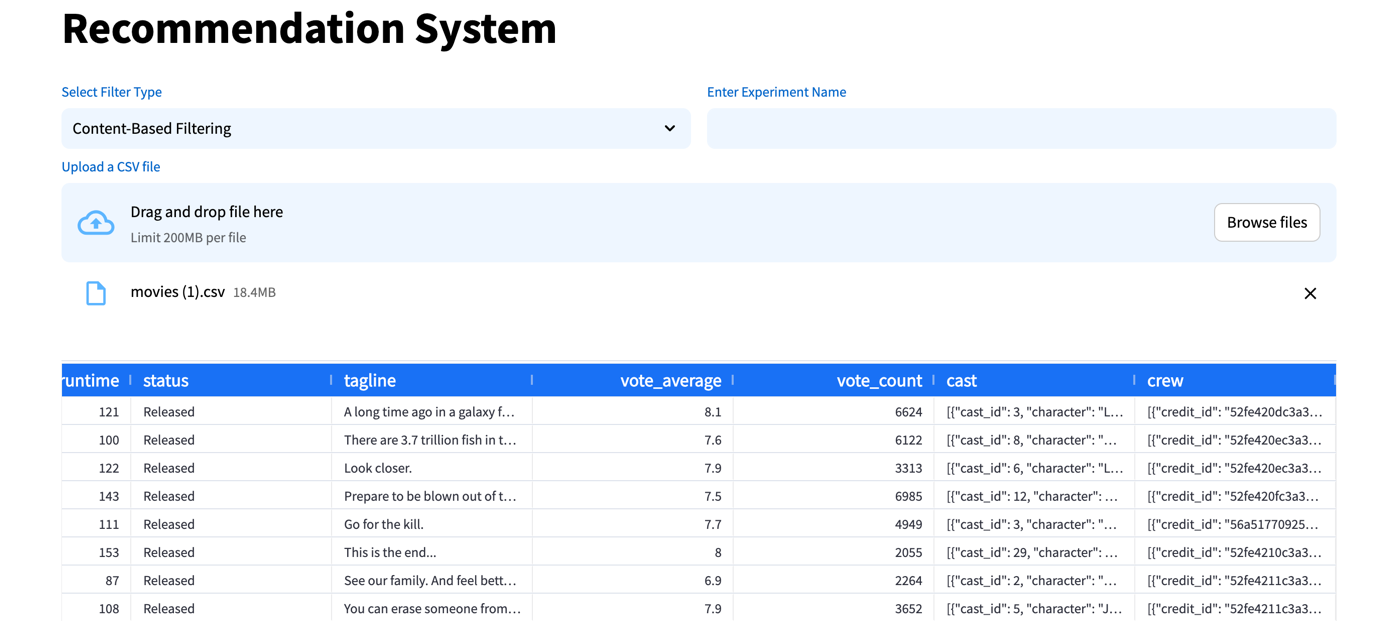
Solution
Technologies Used :
MLAutomata
Exploratory Data Analysis (EDA)
Before delving into model construction, we conduct exploratory data analysis to gain a deeper understanding of the dataset. We analyse the distribution of genres, explore trends in user ratings, and uncover patterns in movie attributes. Visualizations such as histograms, word clouds, and scatter plots offer valuable insights into the underlying data dynamics.
Data Pre-processing
In this phase, we pre-process the dataset to ensure its suitability for building the recommender system.
Vectorization
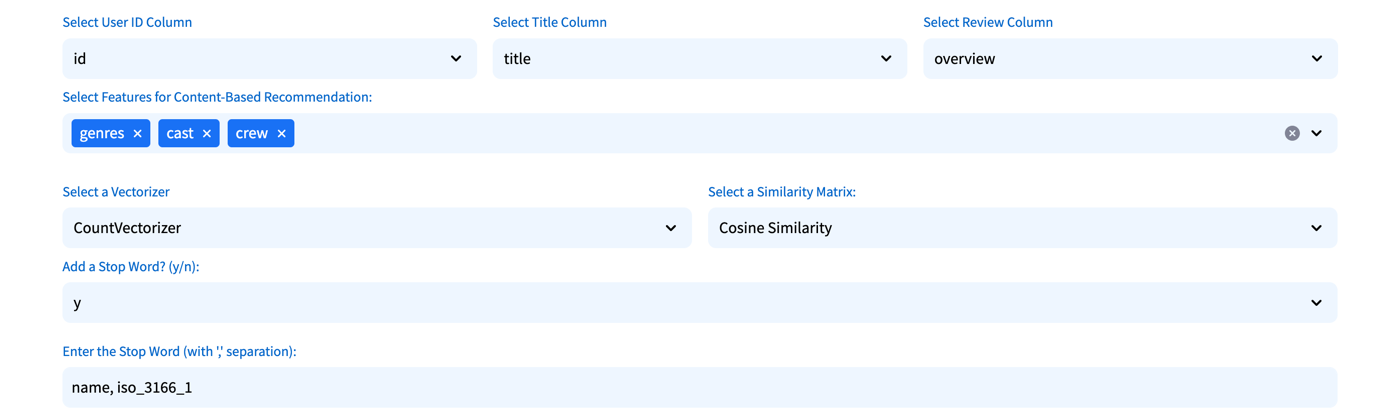
In the context of movies data, vectorization involves representing each movie as a numerical vector based on its attributes such as genre, director, actors, and plot keywords. For instance, if we have a dataset with information about movies where each movie has attributes like genres, directors, and actors, we can represent each movie as a vector in a high-dimensional space. We can use techniques such as one-hot encoding or TF-IDF to convert these categorical attributes into numerical vectors. Each movie will then be represented as a vector where each dimension corresponds to a unique attribute, and the value in each dimension represents the relevance or importance of that attribute to the movie.
Similarity Matrix
We can compute similarity scores using various distance metrics such as cosine similarity, Euclidean distance, or Pearson correlation coefficient. These metrics measure how similar or dissimilar two movies are based on their vector representations. vectorization and similarity matrices are essential components of building a recommender system using movie data. They enable us to represent movies in a numerical format and measure the similarity between them, ultimately facilitating the generation of personalized recommendations for users.
Building the Recommender System
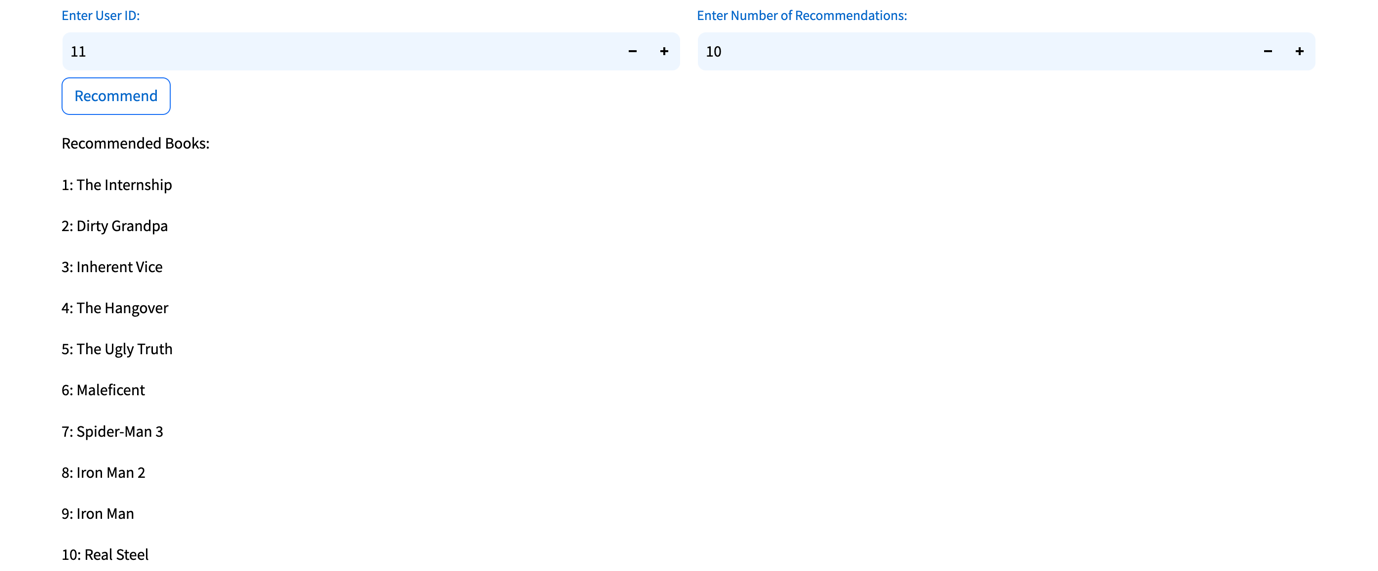
We adopt a content-based filtering approach, focusing on the inherent characteristics of movies to generate recommendations. Leveraging techniques such as TF-IDF (Term Frequency-Inverse Document Frequency) and cosine similarity, we vectorize movie attributes and construct a similarity matrix. This matrix captures the pairwise similarity between movies based on their features, enabling the generation of personalized recommendations.
Our content-based filtering recommender system demonstrates promising results, providing users with personalized recommendations tailored to their movie preferences. By focusing on movie attributes and similarity metrics, we overcome challenges such as cold start problems and sparse user-item interactions. However, we acknowledge areas for improvement, such as enhancing the feature representation and addressing scalability issues for larger datasets.
Conclusion
In conclusion, this case study underscores the transformative potential of data science in shaping personalized movie recommendations. By harnessing the insights derived from data analysis and modelling, we can create innovative solutions that enhance user satisfaction and engagement. Moving forward, further advancements in feature engineering and algorithmic techniques hold the promise of delivering even more refined recommendations.

Contact Us
Your response has been saved. Thank you.
We will reach out to you shortly.

Read More
See the latest of our technologies in our blog section.
The Hidden Costs of LLM APIs That Per-Token Pricing Doesn’t Tell You
This article is part of a series on buildi ...
How We Unified Three LLM Providers Behind One Interface
This article is part of a series on buildi ...
Your LLM Prompt Won’t Save You From This
This article is part of a series on buildi ...

© 2026 krtrimaIQ Cognitive Solutions. All Rights Reserved
Email: info@krtrimaiq.ai