Customer Segmentation
The objective of the study is to learn the customer behavior so that the marketing team can come up with a plan to increase the sales and profits for the company in the next marketing campaign.

Introduction
IFood is a Brazilian technology company, leader in delivery in Latin America, they have delivering food to many cities in Brazil from years. To improve the sales and profit their marketing department have been conducting campaigns. They have conducted 5 campaigns till now and planning to deploy a sixth campaign. The company sells, wines, meat products, fruits, fish, sweet products and gold through 3 main forms like physical store, websites and catalogues.
Objective
The main objective is to learn the customer behaviour so that the marketing team can come up with a plan to increase the sales and profits for the company in the next marketing campaign. Other than increasing the profitability through campaigns the company is interested in knowing customer behaviours. The company is also interested in knowing which type of customers are more likely to buy a product. To deploy a new marketing campaign, they have conducted a pilot study on 2240 customers.
Solution
Customer Segmentation - To better understand the sales and success of a marketing campaigns, we need to understand the customer profile and their behaviour’s well. This customer segmentation helps us in developing an effective marketing campaign to increase the sales and profitability.
Technologies Used :
MLAutomata
Data Analysis
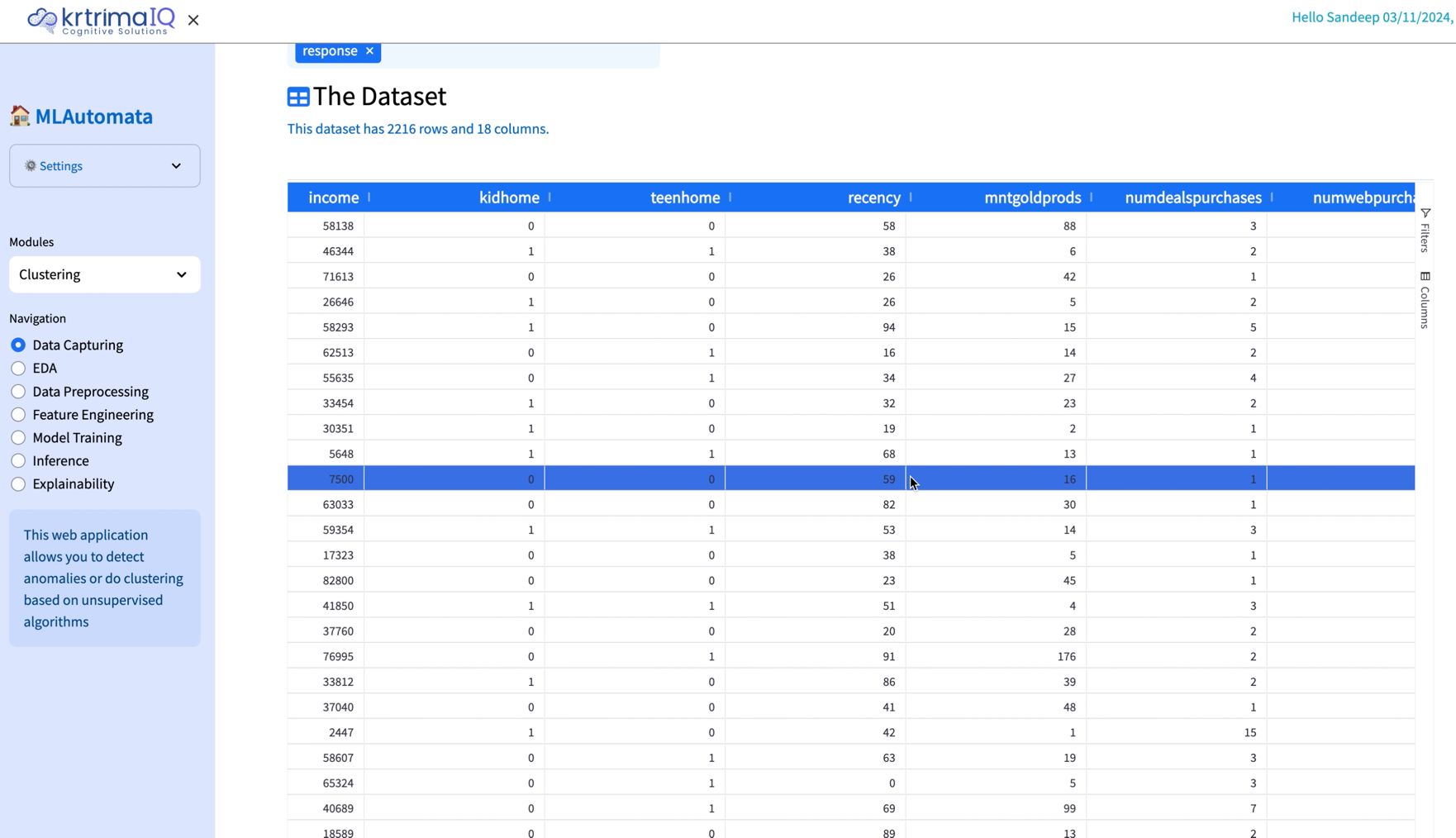
The dataset is shown below. The dataset contains information on 2240 customers who bought food or gold products from the company, the dataset contains customer profile, products purchased by the customer, previous campaigns success.
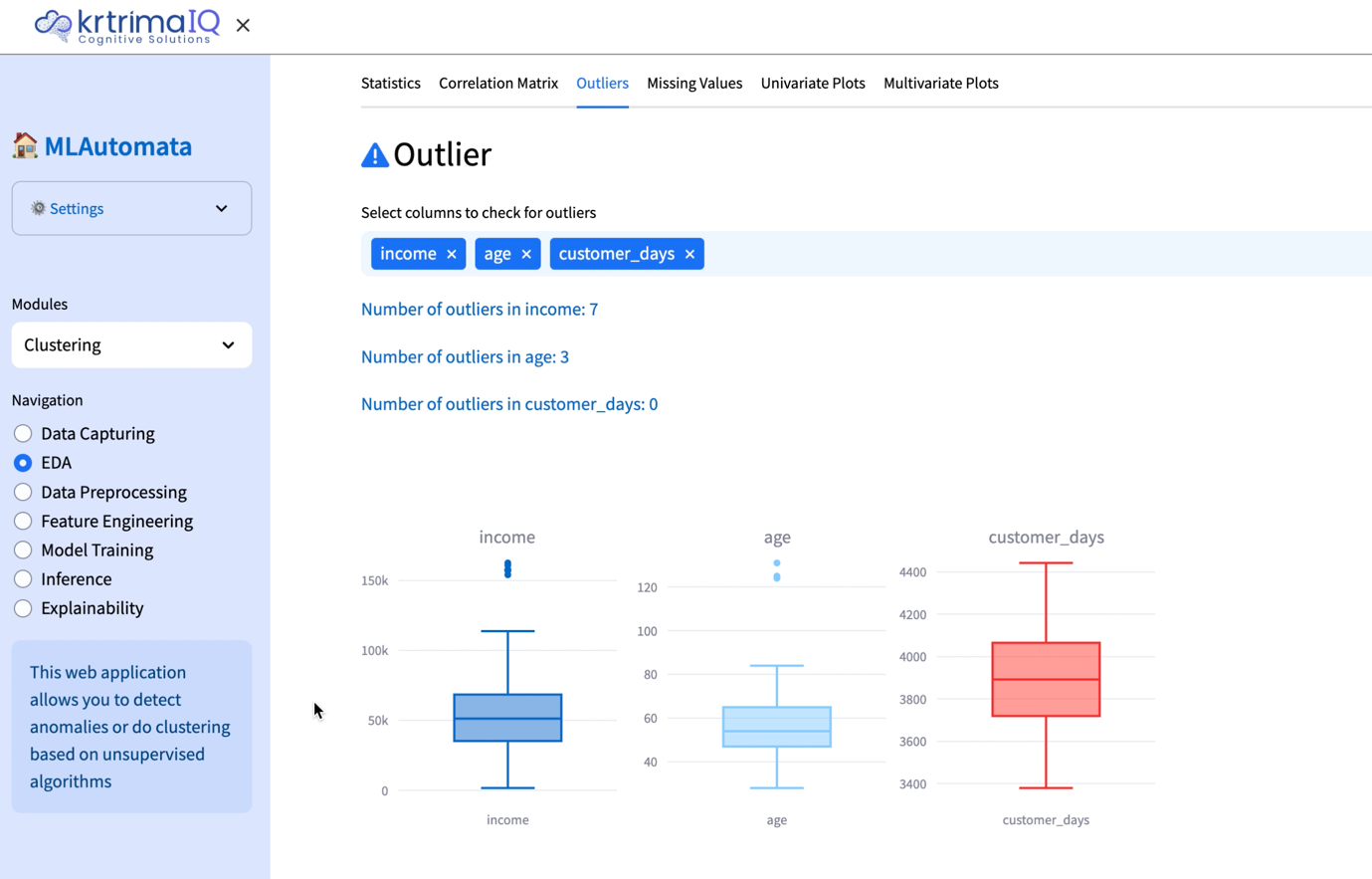
Distribution of some of the numerical variables, the median income is about 50k and very few people had an income more than 150k, and all the customers were above the age 25.
Many variables are highly correlated, so we have removed all the variables with correlation 75, also we have considered Income as one of the important variables in making purchase from the store, so we have included Income for out segmentation purposes.
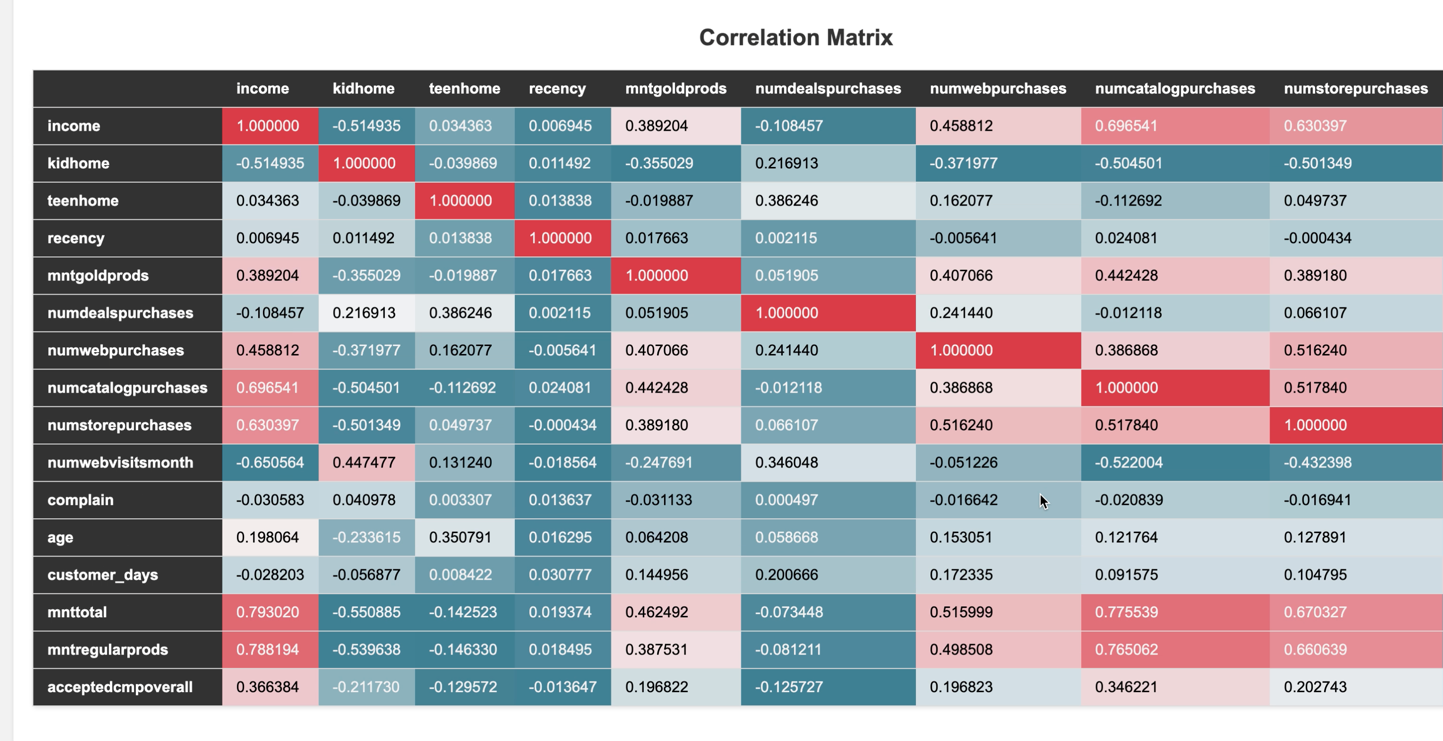
Note: All the features are not displayed in the correlation matrix
Model
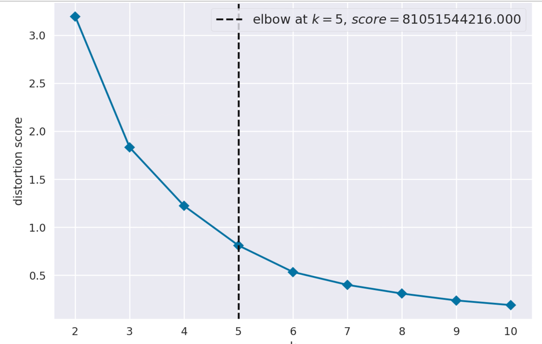
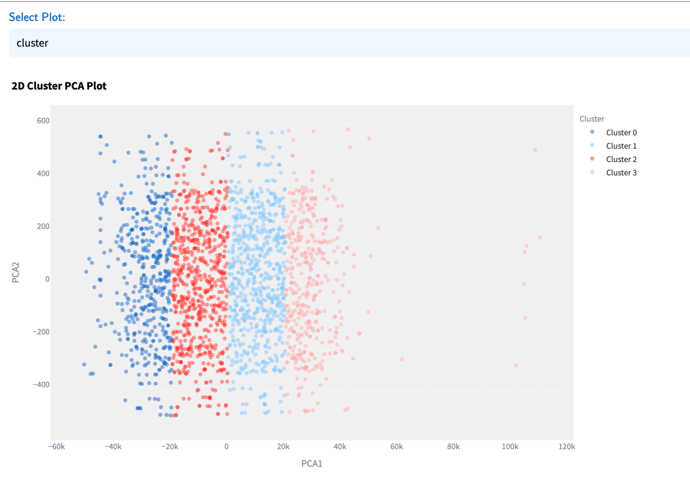
After detailed exploration of the data we have decided to perform a k-means clustering method to make segments. The Elbow plot was suggesting us to perform a k means clustering model with 5 clusters, but we have decided to go with only 4 clusters.
The Model clustered our data into 4 clusters. by looking at the clusters we can see that the model divided the data mainly based on the income of customers. We have named clusters as Low Class, Middle Class, Upper Middle Class and Upper Class respectively based on the median income of the customers in the clusters.
Conclusion
The Clustering Model classified the data into 4 parts and these classifications can been looked at income level of a customers. People with higher income seems to purchase more than the people with lower income levels. Also, the people with lower income level purchased more when the product has some type of deals on them. Most of the amount spent is on food products and not the gold products.
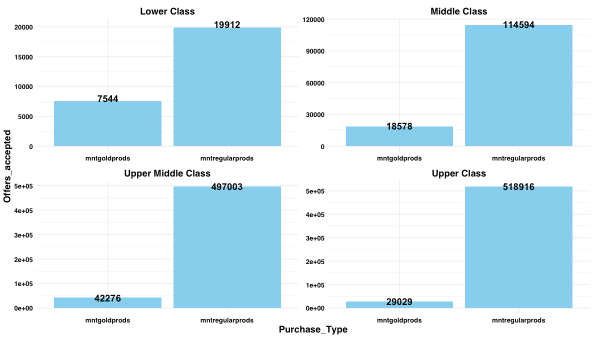
Note: mntgoldprods – Gold Products, mntregularprods – Food Products
So, the marketing department can aim their campaign mostly on high income groups and on catalogue and websites, to increase the profitability and to include lower income peoples they can provide more deals on products within the store. 1/3rd of the amount spent by lower class people are on gold products and very less in other classes, they can market their gold products to high income groups to increase the profitability.
Contact Us
Your response has been saved. Thank you.
We will reach out to you shortly.

Read More
See the latest of our technologies in our blog section.
The Hidden Costs of LLM APIs That Per-Token Pricing Doesn’t Tell You
This article is part of a series on buildi ...
How We Unified Three LLM Providers Behind One Interface
This article is part of a series on buildi ...
Your LLM Prompt Won’t Save You From This
This article is part of a series on buildi ...

© 2026 krtrimaIQ Cognitive Solutions. All Rights Reserved
Email: info@krtrimaiq.ai